Friday, 5 February 2016

Making of Final Piece - Storm Walking

Setting up the Photoshop file
To start with I set up a Photoshop file, the size of the canvas was set to the  global size of an A4 piece of paper. Once this was done I separated the page into three equal sections. This once printed out and cut down would give me the size of my comic. Setting up guild lines I set it so that there was a 1cm break between each double page. This would eventually allow me the ability to cut the pages, once printed without any chance of cutting into my work. 
After the guild-lines were perfect, I filled in the area which would become my pages with the paint bucket tool. This then made it much easier to differentiate between what was going to be my comic, and what was free space.

Adding Texture
In order to add texture to my final piece. I took a normal piece of paper and screwed it up, I then scanned this piece of paper into my laptop and placed it on my Photoshop document. Using blending modes I then changed the layer to Multiply, this added the paper texture over my original white background.

Sketching, Colour and Shading


Photoshop Layout

To begin with I started by creating my filler page design. Following the drafting I had already created I arranged the four separate drawings on my first double page spread. Once this was done I changed the layer to multiply so you can see some of the original paper texture through the drawings. Then this was done I locked the layer so I couldn't accidentally move it or edit it.

I then started adding all my other drawings and doing the same process I described before. Doing this allowed me to archive an authentic and different stylized feeling to my comic. The paper background to each image added texture and made the drawings more interesting. All the screenshots below show the progress I slowly made by adding in more drawings and editing them individually.


Final Arrangement
Below is my final layout.

Final Product
Once the layout was all done I printed out my final pieces, arranged them properly and cut them to size. This was my final thing. 


Wednesday, 3 February 2016

Further Page Development

Below shows a variety of screenshots demonstrating the refinements I have made with three double pages spreads. There three doubles page spreads include two normal double pages and also my front cover and back cover. I've not added colour too these so I can also get a general idea of the lighting and tone throughout my comic pages.

These pages have been developed from my final drafting dummy books.

Friday, 1 January 2016

Final Stage Drafting ( Finalizing Colour Schemes )

Based upon the time range I was given to create all three comic, I have refined my drafting ideas and decided upon creating only one comic and my sleeve design for my final piece. The comic I have decided to create is the first edition in my series which is ' Storm Walking '. Below is the final dummy book development which includes the finalized general colour schemes.

Wednesday, 23 December 2015

Colour Schemes - Interior Cover


To begin with I took the interior cover pages of my comic and experimented with different colour schemes. I did this to test whether a specific colour scheme would work better for my comic or if realistic colouration would be more effective. Below is my first colour scheme test which is a black and white / monochromatic test. 

The second test I tried was a complimentary colour scheme. This consisted of red and green hues as shown in the colour chart below. The example of this actual complimentary colour scheme is shown through the bones and dog bones below.

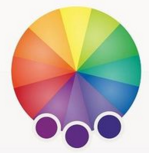
Another colour scheme I tried on my interior cover pages was an analogous scheme. Shown below is a colour wheel showing the variety of hues I used. I chose purple for this example so that there was a large difference between each colour scheme I chose to experiment with.


The final colour scheme I experimented with was a set of Triadic colours. These consisted of purple, green and orange hues, although this was an interesting combination and gave variety to the interior cover of my comic. Although throughout each colour scheme I prefer the a more realistic colour scheme. Due to this fact I have decided to match the hues in my drawings to the ones generally matched with each product. For example I will use a generic green colour for my tennis balls, because that is the colour normally associated with a tennis ball.

Tuesday, 22 December 2015

Lighting and Tone Development

Below is my first experimentation with lighting and tone. These have been created by cropping a small section of my interior cover designs, As you can see the image below shows a variety of grey scale tones. In this example I have not used any pure black shades, this was to get an idea of what the tonal range in my comic would look like without include black, and only using white, light grey and dark grey hues.


The second example I tried and experimented with in lighting and tone did include black. This noticeably increased the texture and also the difference between the tonal range not including black and the tonal range including black. When the black shading is added, the drawings look more aesthetically pleasing, and this is what I am aiming for. Due to this fact I prefer the second experiment instead of the first one.

Below is an example of a tonal range which includes much more black shading, and is somewhat off putting. With the large amount of black and limited white, the drawings look to dark and are displeasing to the eye. Therefore I will use a tonal range which includes black and white hues equally.

Monday, 21 December 2015

Rough Development - Sleeve Design

Below are images showing the development and processes I took to create my Sleeve design.This overall process took over two weeks to perfect and throughout creating my sleeve design I tired a variety of techniques and styles before reaching a final design.

Initial Planning of my sleeve started with making mood boards and sketching out ideas, but the first thing I actually made was a simplistic white, paper design of what my sleeve could look like. This was to figure out the size in which my actual sleeve design would need to be, but also start the beginning processes.

The next thing I did was start to plan out how the actually design I'd already planned would fit onto a A4 piece of paper. This was firstly draw in pencil into my sketchbook, and then with a fine liner I copied over my original lines. One the design was complete I scanned it into the computer and then printed it out on regular paper. This was done so that I could practice colour schemes and different techniques without ruining my original design.

Below you can see a example of some of the colours designed I tested on a print out. This was mainly to figure out what type of hues I wanted to feature on my title strip. As you can see, I tested blue, orange and green. The blue was designed to be somewhat of a contrasting colour against the yellow font. I also attempted to use an orange ink colour to get an monochromatic colour scheme. I also tired using different saturations of brown for the wood background colour. This proved to be difficult since I was using inks, and the colours didn't lighten.

Below is the version I created with water colours inks, one thing I didn't enjoy whilst doing this was the texture in the background wooden panels. Although it proved to be difficult to do everything else. While trying to colour in the vines and flowers, the green hues blended with the brown wooden colour even after it dried, making it hard to understand the design.

Below is the digital version I created, but this was printed on tracing paper to see the types of effects it would give. Surprisingly the effect looked excellent when held to a window or into the light, but the material the product was made of gave it it's faults. Unfortunately although the effect looked nice, the tracing paper design would never be able to hold and carry my comics.

Due to the fact the tracing paper idea was nice, but wasn't practically sound I re-printed my design onto card. This proved to be a good result, both in the effect it gave but also the sturdiness of the sleeve. Below you can see my final design, printed out and glued together.